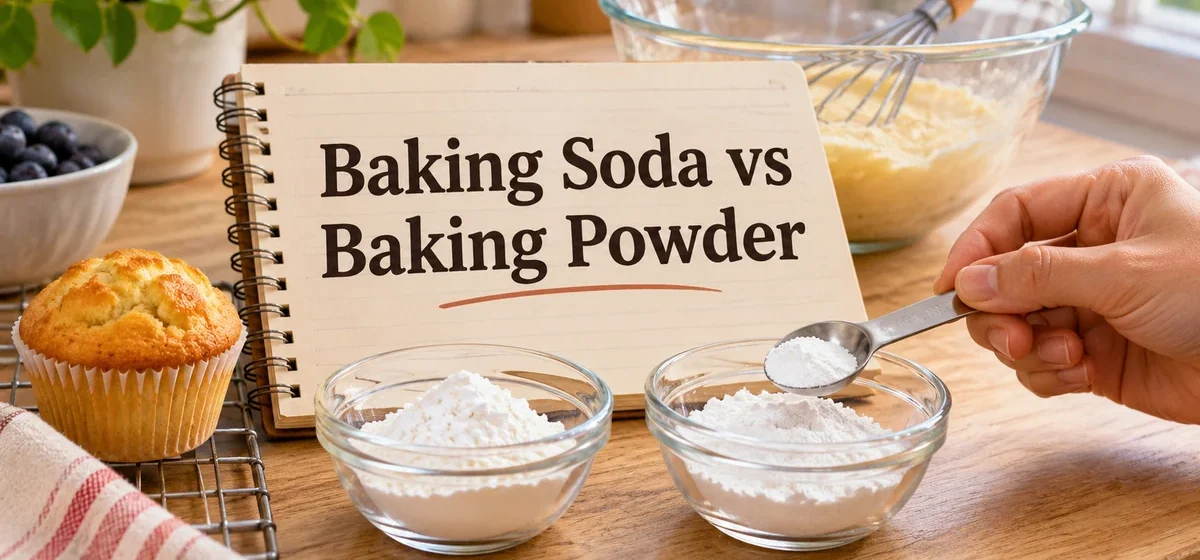
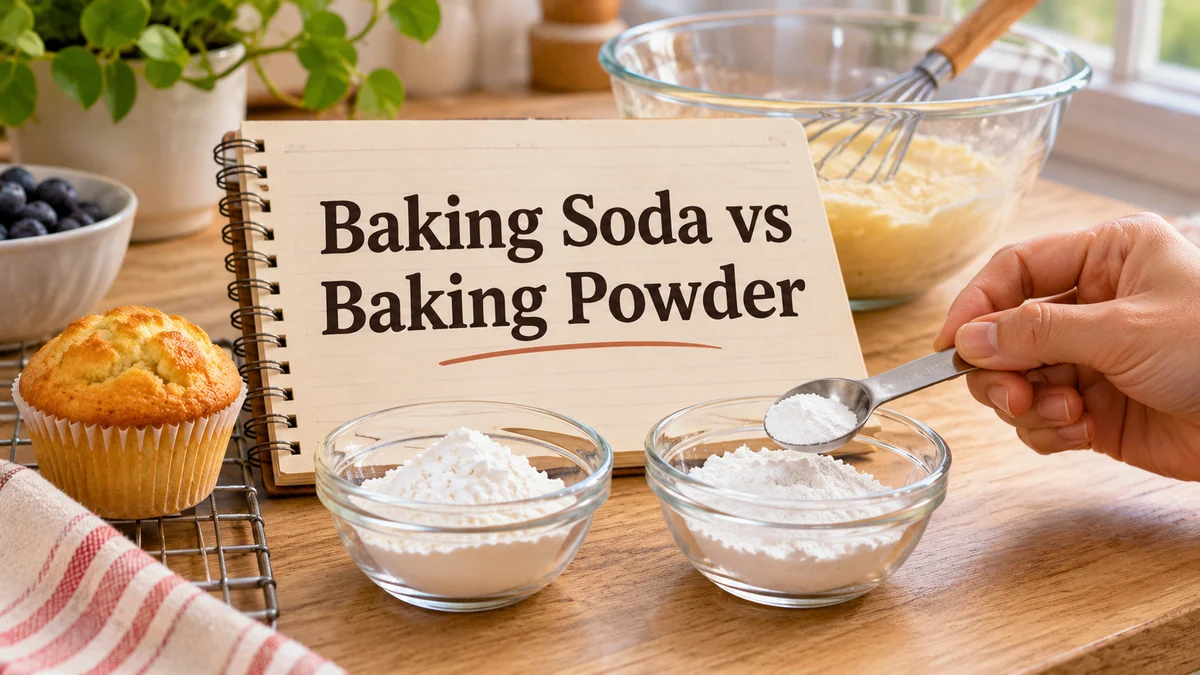
Baking soda is pure sodium bicarbonate, and it needs an acid, such as yoghurt or lemon, to make a cake rise. The powder version already contains soda plus a dry acid, so it works with plain milk. Soda is about 3 to 4 times stronger, which is why 1/4 tsp of soda does the work of roughly 1 tsp of powder.
Getting baking soda vs baking powder right decides whether cookies spread, cakes dome or muffins taste soapy. December is peak baking season in the UAE, with school winter break from 14 December and festive markets across Dubai. Pursueit also lists baking classes in Dubai for adults and children.
This guide compares the two, explains why some recipes use both, and gives swap ratios that actually work.
Guided baking classes
Swipe or scroll to compare classes.
Is Baking Soda the Same as Baking Powder?
No, they are different. Soda is a single ingredient, sodium bicarbonate, that only releases gas when it meets an acid. Powder mixes that soda with a dry acid and a little starch, so it rises with moisture and heat alone. They are not interchangeable one to one.
| Baking soda | Baking powder | |
| What it is | Sodium bicarbonate | Baking soda plus a dry acid plus starch |
| Needs an acid in the recipe? | Yes | No |
| Strength | About 3 to 4 times stronger | Milder |
| When it reacts | As soon as it meets acid and liquid | Once when wet, again in the oven (double-acting) |
| Typical amount | 1/4 to 1/2 tsp per 1 cup flour | 1 to 1 1/2 tsp per 1 cup flour |
| Effect on colour | Browns more, helps cookies spread | Paler, taller crumb |
| Taste if overused | Soapy, metallic | Bitter |
| Common recipes | Cookies, banana bread, buttermilk pancakes | Sponge cakes, muffins, scones |
So is baking powder the same as baking soda? Only in the sense that baking powder contains some. The added acid is the whole difference.
Can I Use Baking Powder in Place of Baking Soda?
Yes, with care. Use about 3 times as much baking powder as the baking soda in the recipe, so 1/4 tsp soda becomes roughly 3/4 tsp powder. The bake may come out a little paler and taste slightly more bitter. It works best in recipes with only a small amount of soda.
Swap ratios
| Recipe calls for | Use instead | Notes |
|---|---|---|
| 1/4 tsp baking soda | 3/4 to 1 tsp baking powder | Expect paler, puffier results |
| 1 tsp baking powder | 1/4 tsp baking soda plus 1/2 tsp cream of tartar | Closest homemade swap |
| 1 tsp baking powder | 1/4 tsp baking soda plus 1/2 cup yoghurt or buttermilk | Cut other liquid by 1/2 cup |
| 1 tsp baking powder | 1/4 tsp baking soda plus 1 tsp lemon juice or vinegar | Bake straight away |
| 1 tsp baking powder | 2 egg whites, whipped | For sponges only |
Going the other way, from powder to soda, needs an acid. No exceptions here. Without one, the cake tastes soapy and stays flat, because the soda has nothing to react with.
Cream of tartar is hard to find in some Dubai supermarkets. Lemon juice or white vinegar does the same job if you bake the batter immediately.
Want a pastry chef to explain the science as you bake?
The Cake Baking Essentials Masterclass at Latifa Tower, Sheikh Zayed Road, costs AED 375 on Pursueit, open to ages 10 and up.
Book Cake EssentialsWhy Do Some Recipes Use Both Baking Soda and Baking Powder?
Some recipes use both because the batter contains an acid, such as yoghurt, buttermilk, brown sugar or cocoa, that the baking soda neutralises, while the baking powder supplies extra lift. The soda also browns the crust and softens the crumb. Chocolate cakes, banana bread and buttermilk pancakes often use both.
Think of each one as having a job. The soda balances the acid and adds colour, while the powder keeps the cake rising after the soda has used up the acid.
Overdoing either causes problems. Each fails in its own way. A cake with excess powder rises fast, then collapses with a coarse crumb, and excess soda leaves a soapy taste and a dark, speckled crust.
Measure with proper spoons and level them off. A heaped teaspoon can carry 50% more than a level one.
How Do You Test If Baking Soda or Baking Powder Is Still Fresh?
Check baking powder by stirring 1/2 tsp into a cup of hot water. It should fizz strongly at once. Test baking soda by adding 1/4 tsp to a spoon of vinegar or lemon juice. A weak fizz means it is past its best. Open tubs usually last about 6 months in a dry cupboard.
Dubai humidity shortens that life. Keep both in airtight jars, away from the kettle and stove, and write the opening date on the lid.
Old baking powder is the most common reason a familiar cake suddenly turns out flat. Check it before the December baking rush.
What Should You Bake This Festive Season in Dubai?
This festive season, try gingerbread biscuits and soft cookies, which use baking soda, and sponge cakes and mince-pie pastry, which lean on baking powder or none at all. The school winter break from 14 December gives children time to help. Festive markets from 1 December offer ideas to copy at home.
| Event or season | Dates | Where | Baking idea |
|---|---|---|---|
| UAE National Day | Wednesday 2 December 2026 | Across the UAE | Flag-colour sponge cake |
| Madinat Jumeirah Festive Market | 4 to 27 December 2026 | Fort Island, Madinat Jumeirah | Gingerbread and festive bakes to taste |
| DXB Winter Festival | 1 December 2026 to 10 January 2027 | Dubai Festival City Mall | Over 150 vendors |
| School winter break | 14 December 2026 to 3 January 2027 | At home | Weekly baking projects |
| Dubai Shopping Festival | 4 December 2026 to 17 January 2027 | Citywide | Pop-up dessert stalls |
Short courses help home bakers move faster. The baking course in dubai guide compares fees and lengths across the city.
| Baking class on Pursueit | Where | Age | Price |
|---|---|---|---|
| Cake Baking Essentials Masterclass | Latifa Tower, Sheikh Zayed Road | 10+ | AED 375 for 1 session |
| Bread Baking Masterclass | Latifa Tower, Sheikh Zayed Road | 16+ | AED 425 for 1 session |
| Oven Fresh Cookies Masterclass | Latifa Tower, Sheikh Zayed Road | 16+ | AED 360 for 1 session |
| Cupcake Masterclass For Kids | Palm Jumeirah Mall | 4 to 12 | AED 275 for 1 session |
Got a young baker at home this winter?
Children aged 4 to 12 can bake and decorate at the Cupcake Masterclass For Kids, Palm Jumeirah Mall, for AED 275 on Pursueit.
Book Kids CupcakesCompare guided baking classes
Swipe or scroll to compare classes.
Frequently Asked Questions
1. What happens if I use baking soda in place of baking powder?
Without an acid in the recipe, the soda cannot react fully, so the bake stays dense and tastes soapy or metallic. If the recipe has yoghurt, buttermilk or lemon, use about a quarter of the baking powder amount in soda. Swapping 1 tsp powder? Try 1/4 tsp soda plus 1 tsp lemon juice.
2. Can I make baking powder at home?
Yes. Mix 1 part baking soda with 2 parts cream of tartar, then add 1 part cornflour if you plan to store it. Use it at once for best results, since homemade powder is single-acting and reacts as soon as it gets wet. Make only what you need for one bake.
3. Why do my cakes taste bitter or soapy?
Excess raising agent is the usual cause. Soapy flavours point to excess baking soda, while bitterness often comes from too much baking powder. Level the spoon every time, since 1 tsp of soda is far stronger than 1 tsp of powder. Halve the amount and test again.
4. Is baking soda the same as bicarbonate of soda?
Yes, all three names describe the same thing. British recipes and many UAE shops say "bicarbonate of soda", while American recipes say "baking soda". Both are white powders sold in small tubs of around 100 to 500 g.
5. Do cookies need baking soda or baking powder?
Classic chocolate chip cookies usually use baking soda, since brown sugar supplies the acid and soda helps them spread and brown. Cakey, puffy cookies often use baking powder. Some recipes use a little of each. For chewy cookies with crisp edges, stick with about 1/2 tsp soda per 190 g flour.
Ready to Book?
Test your tubs today, then bake with confidence through December. Masterclasses on Pursueit start from AED 275 for kids and AED 360 for adults.
Browse Baking Classes