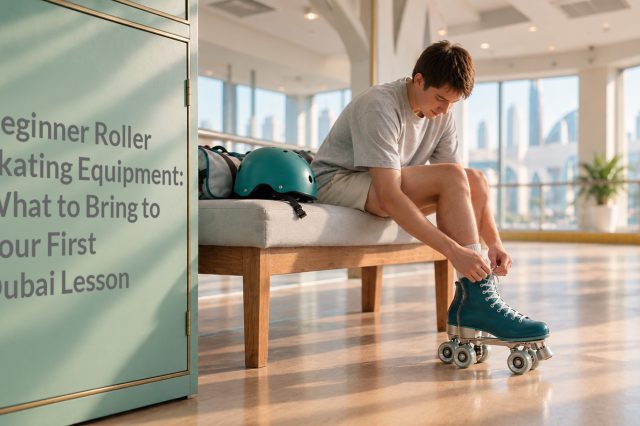

Roller skating vs inline skating is the first equipment question most beginners face before booking a lesson. The two terms are used interchangeably in everyday conversation but describe physically different setups that produce different learning experiences, particularly in the first few sessions. Understanding the actual difference before you walk into a lesson or buy skates saves time and prevents a mismatch between what you buy and what the class teaches. Browse skating classes on Pursueit to see both formats.
This guide covers exactly what roller skating vs inline skating means in practice, which one suits different beginner profiles, how the learning curve compares, and what Dubai classes are available for each through Pursueit. The answer is less about which format is objectively better and more about which one fits your age, intended use and personal comfort with balance challenges.
The Actual Difference: Roller Skating vs Inline Skating
Roller Skating (Quad Skates)
Roller skating refers to quad skates, which have four wheels arranged in a 2×2 square layout, two wheels at the toe, two at the heel. The wheel arrangement creates a wider base of support than inline skates, which provides more inherent lateral stability when standing still. Quad skates also typically have a toe stop, a rubber block at the front of the boot, which is the primary stopping method for roller skating for beginners. Roller skating vs inline skating in this sense means lower initial stability challenge but less agility at speed.
Inline Skating (Rollerblading)
Inline skating places all wheels in a single line under the boot, which is why roller skating vs rollerblading sometimes appears as an alternative phrasing. The single-line wheel arrangement makes inline skates more manoeuvrable at speed and on uneven surfaces, but the narrower base requires more active balance management from the first moment you stand on them. Inline skates use a heel brake or a T-stop rather than a toe stop. Most recreational inline skates include a heel brake for roller skating for beginners.
Which Is Easier for Roller Skating for Beginners?
Roller skating for beginners in the quad format has a marginally lower initial balance demand because the wider wheel base provides more passive stability when stationary. Most beginners can stand in quad skates without gripping a wall within a few minutes of first wearing them. The same beginner in inline skates typically takes more time to stabilise standing before attempting movement.
Over the first 3 to 5 sessions, the difference narrows significantly. Roller skating vs inline skating in terms of progress speed after the first lesson is largely comparable for most beginners. What matters more than the equipment choice is the quality of instruction and how consistently the learner practises between sessions. A beginner with good instruction in inline skates will often outpace a beginner in quad skates who doesn’t practise between classes.
Coach guidance consistently cited in Pursueit skating reviews: starting position, weight distribution and looking ahead rather than at the wheels are the corrections that produce the fastest early progress regardless of whether students are on quad or inline skates.
What Pursueit Teaches: Both Disciplines Covered
The roller skating vs rollerblading question is addressed directly in Pursueit’s skating listings. The 1-on-1 skating lessons at-premise specifically name both disciplines. Structured group classes at JVC, DIP 1, Al Warqa and Al Nahda cover balance, gliding, stopping (T-stop and toe brake), crossovers and agility drills across an 8-session block, a curriculum that applies to both quad and inline formats at the foundational stages, since the underlying balance and movement skills are the same regardless of wheel layout.
The kids roller skating class JVC (ages 4 to 18, StriveX Sports Academy) follows this 8-session progressive structure and accommodates students with either skate type. The instructor-to-student ratio keeps roller skating vs inline skating technique differences manageable within the group format.
Which to Buy: Quad or Inline for a First Dubai Lesson?
For children aged 4 to 8 attending their first roller skating for beginners session: quad skates are the more commonly recommended starting point. The passive stability reduces the initial challenge and the toe-stop braking method is more intuitive for young children than a heel brake or T-stop.
For adults and older children (10 and above) starting from scratch: both work. Inline skates are more versatile for outdoor use on Dubai’s cycling paths, open plazas and community tracks. Quad skates are more commonly used in dedicated indoor skating rinks if that is your intended environment. Roller skating vs inline skating for adult beginners ultimately comes down to where you plan to skate most often once you leave the lesson.
For at-premise private lessons: confirm with your instructor before the first session what equipment they bring and what you need to supply. The private skating lessons listing on Pursueit accommodates both roller skating and rollerblading formats.
Protective Gear: Same for Both
Roller skating vs rollerblading in terms of safety gear requirements is identical:
- Helmet — required at all venues and for all ages, correctly fitted with the rim two finger-widths above the eyebrows.
- Knee pads — essential for the first 3 to 4 sessions of roller skating for beginners regardless of skate type. Falls in early sessions are overwhelmingly onto the knees.
- Wrist guards — protect against the instinctive forward hand placement when falling. Important for both quad and inline skaters at the beginner stage.
- Elbow pads — recommended for younger beginners and high-fall-risk first sessions.
Most Pursueit skating venues allow gear borrowing for the first session. From session two onward, students are expected to bring their own equipment. MKJ Sports offers a complete kit at AED 200 at Al Warqa and Al Nahda venues if you want to purchase on the day.
Frequently Asked Questions
Is roller skating or inline skating easier to learn?
Roller skating vs inline skating for first-time beginners: quad roller skates have a marginally lower initial balance demand. Inline skates require slightly more active balance management from session one. Over 3 to 5 sessions, the learning curve difference becomes negligible for most students with good instruction.
What does Pursueit teach — roller skating or rollerblading?
The structured group classes list roller skating as the primary format, but the curriculum applies to both quad and inline formats at beginner level. The 1-on-1 Skating or Rollerblading Lessons listing specifically names both disciplines. Roller skating vs rollerblading instruction at the beginner level covers the same foundational skills regardless of skate type.
Can children start with inline skates at Pursueit classes?
Yes, though the class guidance recommends students bring appropriate equipment for their level. Roller skating for beginners aged 4 to 8 is typically better supported by quad skates due to the wider base. For ages 10 and above, inline skates are appropriate from the first lesson.
What is the cost of beginner skating lessons in Dubai?
Group roller skating for beginners at JVC runs at AED 499 for 8 sessions (5% off). Private 1-on-1 Skating or Rollerblading Lessons run at AED 250 per session. All current prices are shown on Pursueit before booking.
Ready to choose and get on skates? Compare classes — view skating classes