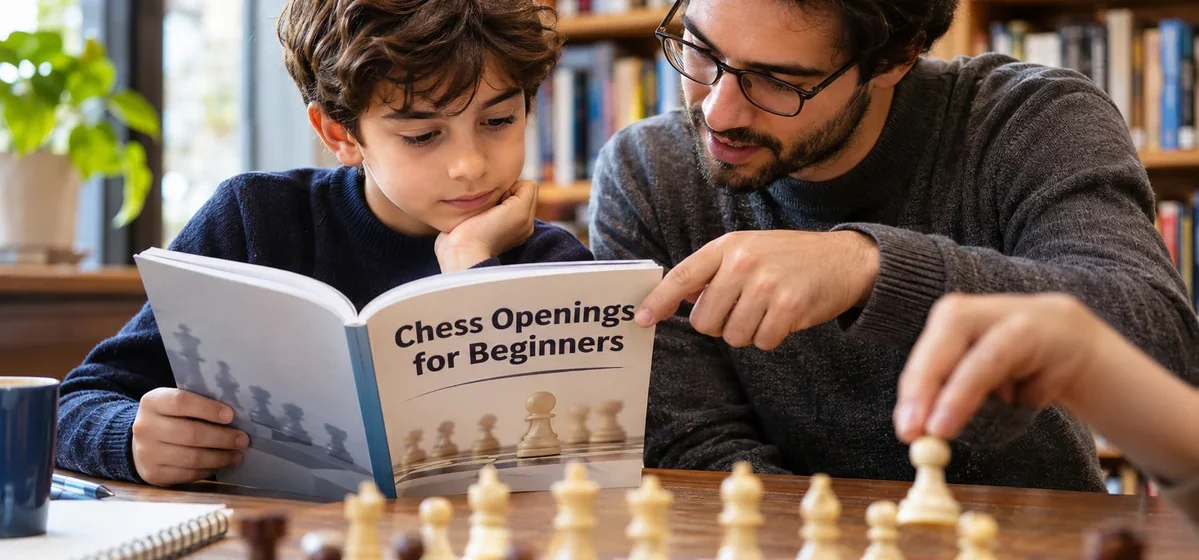
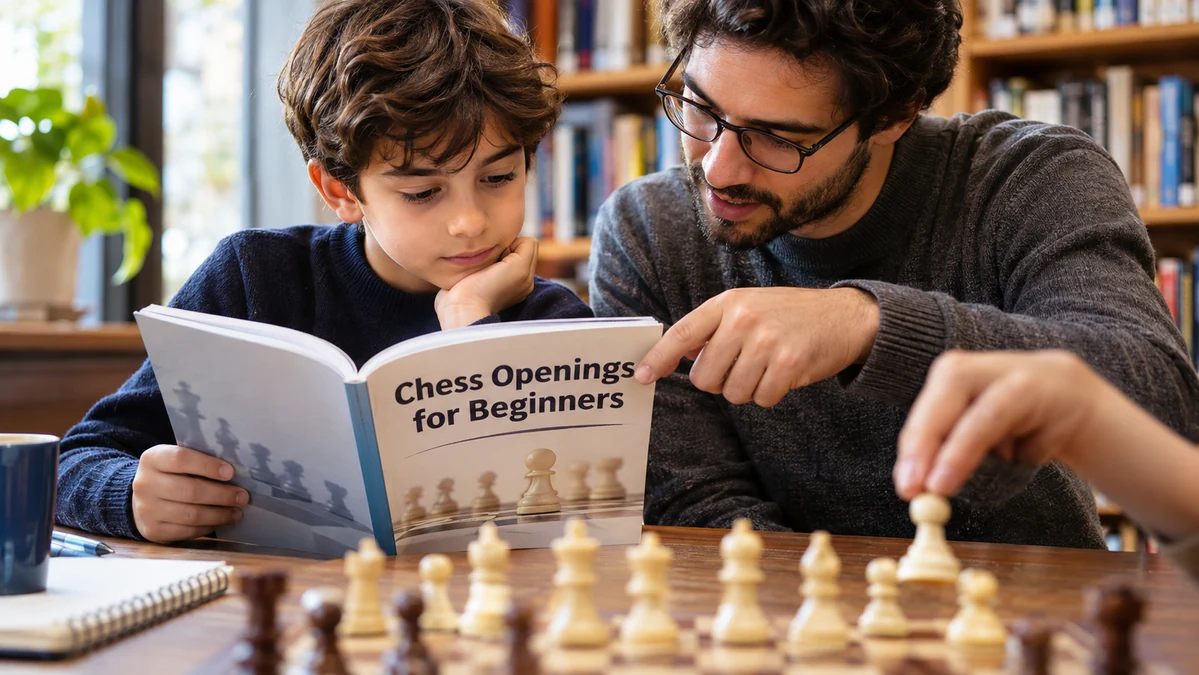
Six chess openings give beginners a strong start. With White, try the Italian Game, Scotch Game or Four Knights after 1.e4, or the London System and Queen's Gambit after 1.d4. The Caro-Kann is a solid reply for Black. Kids should learn the ideas behind them first, then the first 4 or 5 moves.
Winter suits chess practice. Short indoor sessions fit around school, and the break from 14 December gives three weeks to play daily. For guided lessons, Pursueit lists chess classes in Dubai online and at home.
This guide covers opening principles, the six openings with their moves, and the traps every child should know.
Chess classes for beginners
Swipe or scroll to compare classes.
What Is the Best Chess Opening for Beginners?
The Italian Game is often called the best chess opening for beginners. After 1.e4 e5 2.Nf3 Nc6 3.Bc4, White controls the centre, develops two pieces quickly and aims the bishop at Black's weak f7 square. The ideas are simple to remember, and the same plans appear in thousands of games.
Before any single opening, learn the three principles behind every good start.
- Control the centre. Put pawns or pieces on e4, d4, e5 or d5.
- Develop your pieces. Bring knights and bishops out before moving the queen.
- Castle early. Get your king to safety, usually by move 10.
These rules beat memorised lines. A child who follows them plays sensible openings even without knowing the names. Names can come later.
Which Chess Openings Should Kids Learn First?
Kids should learn one opening as White and one defence as Black first. Start with the Italian. A good pair is the Italian Game for White and the Caro-Kann for Black. Once those feel natural, add the London System, which follows the same setup against almost any reply, so it needs very little memorising.
The 6 openings at a glance
| # | Opening | Colour | First moves | Main idea | Level |
|---|---|---|---|---|---|
| 1 | Italian Game | White | 1.e4 e5 2.Nf3 Nc6 3.Bc4 | Quick development, pressure on f7 | Beginner |
| 2 | Scotch Game | White | 1.e4 e5 2.Nf3 Nc6 3.d4 | Open the centre early | Beginner |
| 3 | Four Knights Game | White or Black | 1.e4 e5 2.Nf3 Nc6 3.Nc3 Nf6 | Develop all four knights, keep it balanced | Beginner |
| 4 | London System | White | 1.d4 d5 2.Bf4, then e3, Nf3, c3 | Same solid setup every game | Beginner to intermediate |
| 5 | Queen's Gambit | White | 1.d4 d5 2.c4 | Offer a pawn to win the centre | Intermediate |
| 6 | Caro-Kann Defence | Black | 1.e4 c6 2.d4 d5 | Solid reply to 1.e4, safe structure | Beginner to intermediate |
The Queen's Gambit is not a real gamble. If Black takes the c4 pawn, White usually wins it back with good play.
The Four Knights is the calmest of the six. Early traps are rare here, which makes it a friendly choice for young players learning to develop.
Want a coach to build your child's opening plan?
The Online Group Chess Class runs 4 sessions for AED 300 on Pursueit, for players aged 5 and up.
Book Group ChessHow Many Chess Openings Do I Need to Know?
Beginners need just two: one opening with White and one defence against 1.e4 with Black. Add a reply to 1.d4 after a few months. At beginner level, blunders decide far more games than opening knowledge, so time spent on tactics pays back faster.
Knowing 5 moves of each opening is plenty at first. Then the reasons behind each move matter more.
A simple study plan works well. Play 10 games with one opening, then look at where each game went wrong in the first 10 moves, and adjust.
What Opening Traps Should Kids Know?
Every beginner should know how to stop Scholar's Mate, the four-move checkmate on f7 using the queen and bishop. Watch for the Fried Liver Attack in the Italian Game, and learn Legal's Mate, a queen sacrifice trap. Knowing these keeps young players from losing in under ten moves.
| Trap | How it starts | How to defend |
|---|---|---|
| Scholar's Mate | 1.e4 e5 2.Qh5 Nc6 3.Bc4 | Play 3…g6, then 4…Nf6 after 4.Qf3 |
| Fried Liver Attack | Italian Game, after 3…Nf6 4.Ng5 | Learn 4…d5 5.exd5 Na5, avoid 5…Nxd5 |
| Legal's Mate | Black pins the f3 knight with …Bg4 too early | Do not grab the queen if it opens your king |
Scholar's Mate catches more children than any other trap. Once a child learns to guard f7 with a knight or the g-pawn, early losses drop sharply and games start to last long enough to teach real lessons.
Free analysis boards online show every mistake after a game, which suits children who like to review on a tablet.
What Chess Activities Are On in the UAE This Winter?
This winter, the school break from 14 December to 3 January gives three full weeks for daily chess practice and holiday tournaments. Clubs such as the Dubai Chess and Culture Club run junior events through the season, and UAE National Day on 2 December brings a long weekend for family games.
| Event | Dates | Where | Good for |
|---|---|---|---|
| Sharjah International Book Fair | Until 15 November 2026 | Expo Centre Sharjah | Free entry, chess books for kids |
| UAE National Day | 2 December 2026 | Across the UAE | Long weekend for family games |
| School winter break | 14 December 2026 to 3 January 2027 | Across the UAE | Daily practice, junior tournaments |
| Global Village Season 31 | Running now | Dubailand | Family evenings out |
Set a winter goal, such as learning one opening for each colour by January. Little and often works. Short practice of 20 minutes a day beats long weekend sessions.
| Chess class on Pursueit | Format | Age | Price |
|---|---|---|---|
| Online Class: Chess For Beginners | Online | 5+ | AED 60 for 1 session |
| Online Class: Chess For Intermediate Learners | Online | 6+ | AED 80 for 1 session |
| Online Class: Chess For Advanced Learners | Online | 6+ | AED 115 for 1 session |
| Online Chess Class (Semi-Private) | Online, small group | 5+ | AED 340 for 4 sessions |
| Private Chess Class | At your home | 4+ | AED 425 for 1 session |
Ready for one-to-one coaching at home?
The Private Chess Class comes to your home for AED 425 a session on Pursueit, for children from age 4.
Book Private ChessCompare chess classes for beginners
Swipe or scroll to compare classes.
Frequently Asked Questions
1. What is the safest chess opening for Black?
The Caro-Kann Defence, 1.e4 c6 followed by 2…d5, is one of the safest choices for Black against 1.e4. The defence builds a solid pawn structure and avoids early traps. Against 1.d4, beginners often play 1…d5 and develop calmly with …Nf6, …e6 and …Be7.
2. Should kids memorise chess openings?
Not at first. Children learn faster by understanding the three principles, centre control, quick development and early castling, than by memorising long lines. After a few months of games, learning the first 4 or 5 moves of one opening for each colour gives them structure without overload. Games teach the rest.
3. Is the London System good for beginners?
Yes. The London System suits beginners because White plays the same setup, d4, Bf4, e3, Nf3 and c3, against almost every reply. The king stays safe, and sharp early fights are rare. Some coaches suggest learning an e4 opening too, for more open, tactical games.
4. What is the most popular chess opening?
1.e4, the King's Pawn Opening, is the most common first move at most levels, followed by 1.d4. Among named openings, the Sicilian Defence is one of the most played replies to 1.e4 at club and master level, though its complexity means beginners often learn it later.
5. How long does it take to learn a chess opening?
A child can learn the first 5 moves of an opening in one lesson. Understanding the plans takes longer, usually 10 to 20 games played with the opening. Reviewing each game with a coach or an analysis board speeds this up, since mistakes are easier to spot afterwards.
Ready to Book?
Pick one opening for White and one for Black this week, then play 10 games with each. Online chess classes on Pursueit start from AED 60 a session.
Browse Chess Classes