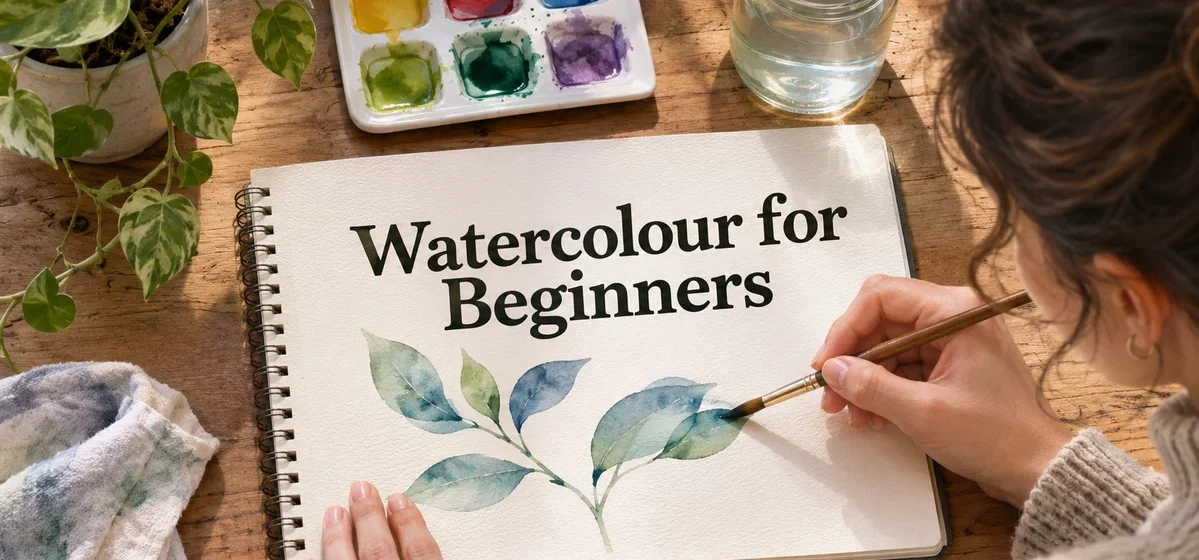
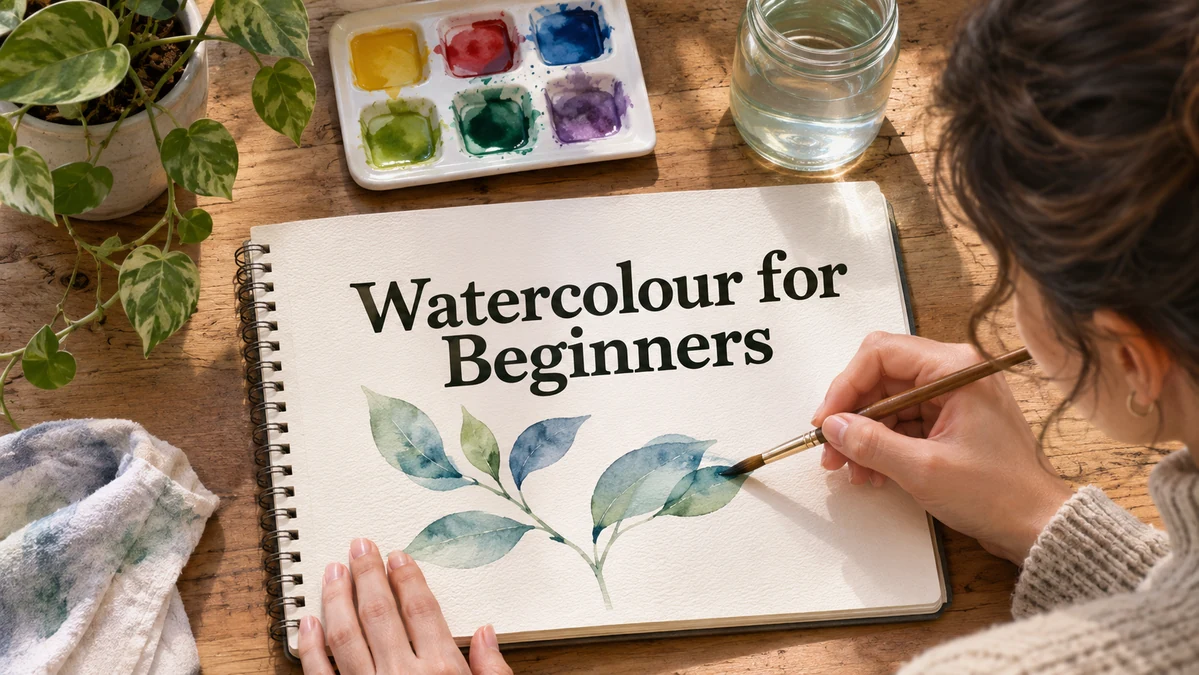
Watercolor painting for beginners needs only five things: 300 gsm paper, three or four brushes, a small paint set, two water jars and a paper towel. Learn 6 techniques first, starting with the flat wash and wet-on-wet, then try a simple first project like a sunset sky or a single flower.
Winter suits it well. Cooler, less humid evenings in Dubai help paint dry evenly on a balcony table, and a starter kit fits in one drawer. For guided practice, Pursueit lists art classes in Dubai for children and adults.
This guide covers supplies, the six techniques, colour mixing and three projects to try this week.
Watercolor and painting classes
Swipe or scroll to compare classes.
How Do I Start Watercolor Painting as a Complete Beginner?
To start watercolor painting, buy a small set of student-grade paints, cold-pressed paper of 300 gsm and a round brush in size 8. Practise a flat wash and a gradient on scrap pieces first. Then paint one simple subject, like a sky, in under 30 minutes. Short daily sessions beat long weekend ones.
Paper matters more than paint at the start. Thin paper buckles when wet, so even a cheap 300 gsm pad gives better results than expensive paint on printer paper.
Tape your paper to a board with masking tape on all four sides. It stays flat as it dries. Peeling the tape off leaves a clean white border.
Expect messy first attempts. The paint moves on its own, and learning to work with that is half the fun.
What Supplies Do I Need for Watercolor Painting?
You need watercolor paper of at least 300 gsm, a student paint set of 12 colours or fewer, round brushes in sizes 4 and 8, and one flat brush. Add two jars of water, one for rinsing and one clean, a mixing palette, masking tape and paper towels. That kit covers months of practice.
| Supply | What to buy first | Why it matters | Budget tip |
|---|---|---|---|
| Paper | Cold-pressed, 300 gsm (140 lb) | Holds water without buckling | A pad of A5 sheets is enough to start |
| Paint | Student set, 12 pans or tubes | Pans travel well, tubes give stronger colour | Upgrade single colours later |
| Brushes | Round size 4 and 8, flat 1 inch | Round for detail, flat for washes | Synthetic brushes work fine |
| Palette | White plastic or ceramic | Shows true colour when mixing | A white plate works too |
| Water | Two jars | One rinse, one clean | Change the water often |
| Extras | Masking tape, paper towel, pencil | Flat paper, lifting, light sketching | Use a soft HB pencil |
A limited palette teaches mixing faster. Many teachers suggest starting with one warm and one cool version of each primary colour.
What Are the 6 Easy Watercolor Techniques for Beginners?
The 6 easy watercolor techniques are the flat wash, the gradient wash, wet-on-wet, wet-on-dry, lifting and layering, also called glazing. Each one takes about 10 minutes to practise on a scrap of paper. Together, they cover nearly every effect in beginner paintings, from skies to flower petals.
| # | Technique | How to do it | Use it for |
|---|---|---|---|
| 1 | Flat wash | Load a wide brush and pull even strokes across, slightly overlapping | Backgrounds, plain skies |
| 2 | Gradient wash | Start strong, add water to each new stroke so the colour fades | Sunsets, sea |
| 3 | Wet-on-wet | Wet the paper first, then drop colour in and let it spread | Soft clouds, blurred backgrounds |
| 4 | Wet-on-dry | Paint onto dry paper for crisp edges | Leaves, buildings, details |
| 5 | Lifting | Dab wet paint with a clean damp brush or paper towel | Clouds, highlights |
| 6 | Layering (glazing) | Let one layer dry fully, then paint a thin layer over it | Shadows, depth |
Wet-on-wet surprises most learners. The paint blooms in shapes you cannot fully control, so keep it for areas where soft edges look natural.
Layering needs patience. Wait until the shine has gone from the paper, or the new colour lifts the one below and turns muddy.
Want a teacher to show you washes in person?
The Watercolor class at Plazzo Heights, JVC, runs a 2-hour session for AED 235 on Pursueit, for ages 6 and up.
Book WatercolorHow Do You Mix Watercolors Without Getting Mud?
To mix watercolors cleanly, combine only two colours at a time and add water to lighten them, never white. Mix on the palette first and test on scrap paper. Mud comes from mixing three or more colours, or from painting over a layer that is still damp.
Water controls strength, with more water for a lighter tint and less for deep colour.
Try a simple mixing chart. Paint each colour across the top row and down the side, then fill each square with the two mixed together. Keep it as a reference sheet for every session.
Darks come from mixing, too. Blue and brown make a rich dark grey that looks more natural than black from the tube.
What First Projects Should a Beginner Paint?
Three good first projects are a gradient sunset, a simple tulip and a desert dune scene. Each uses only two or three techniques and finishes in under 45 minutes. Start with the sunset, because it needs just one gradient wash and a dark silhouette.
| Project | Techniques used | Colours | Time |
|---|---|---|---|
| Gradient sunset | Gradient wash, wet-on-dry silhouette | Yellow, red, blue | 20 minutes |
| Simple tulip | Wet-on-dry, lifting | Red, green | 30 minutes |
| Desert dunes | Flat wash, layering | Yellow ochre, burnt sienna, blue | 45 minutes |
Desert dunes make a fun local subject. Paint the sky first, then build each dune with layers once the sky has dried, using yellow ochre for the sunny side and a touch of blue in the shadows.
More simple subjects sit in the easy drawing ideas guide, ready to paint once sketched.
What Art Events Are On in the UAE This Winter?
This winter, Frieze Abu Dhabi runs from 19 to 22 November at Manarat Al Saadiyat, and free outdoor sculptures stay on Mamsha Beach until 16 December. The Guggenheim Abu Dhabi opens on 11 December, free for under-18s, and the school break from 14 December suits art workshops.
| Event | Dates | Where | Good to know |
|---|---|---|---|
| Frieze Abu Dhabi | 19 to 22 November 2026 | Manarat Al Saadiyat | Public days from 20 November |
| Frieze Sculpture | Until 16 December 2026 | Mamsha Beach, Saadiyat | Free outdoor works |
| Guggenheim Abu Dhabi opens | From 11 December 2026 | Saadiyat Cultural District | AED 70, free for under-18s |
| Madinat Jumeirah Festive Market | 4 to 27 December 2026 | Madinat Jumeirah | Free entry, craft stalls |
| School winter break | 14 December 2026 to 3 January 2027 | Across the UAE | Time for art workshops |
Take a small travel set to a gallery day, since painting what you just saw fixes it in memory.
Pursueit lists painting classes in dubai across mediums at Plazzo Heights in JVC. Online workshops suit busy weeks.
| Painting class on Pursueit | Where | Age | Price |
|---|---|---|---|
| Watercolor class | Plazzo Heights, JVC | 6+ | AED 235 for 1 session |
| Watercolour Florals Workshop | Online | 12+ | AED 135 for 1 session |
| Acrylic Painting Class | Plazzo Heights, JVC | 5+ | AED 235 for 1 session |
| Art Class For Children | Plazzo Heights, JVC | 3 to 15 | AED 100 for 1 session |
| Abstract Painting Workshop | Online | 6+ | AED 99 for 1 session |
Prefer to learn florals from home?
The Watercolour Florals Workshop runs online for AED 135 a session on Pursueit, for learners aged 12 and up.
Book the Florals WorkshopCompare watercolor and painting classes
Swipe or scroll to compare classes.
Frequently Asked Questions
1. Is watercolor harder than acrylic for beginners?
Watercolor is usually harder to control at first, because it stays transparent and you cannot paint light over dark. Acrylic dries opaque, so mistakes cover easily. It needs fewer supplies and less cleaning, though, which makes it easy to practise at home for 20 minutes a day.
2. How do I paint watercolor flowers?
Sketch the flower lightly in pencil, then paint each petal wet-on-dry with a round size 8 brush. Drop a second, darker colour into the base while the petal is still damp. Lift a highlight with a clean brush, and add the stem last once the petals dry. Test petals on scrap first.
3. Can kids learn watercolor painting?
Yes. Children from about 5 or 6 enjoy wet-on-wet blooms and simple skies. Use thick paper so it does not tear, and give them a limited palette of 3 to 5 colours. Classes in Dubai often take children from age 6.
4. How long does watercolor take to dry?
A light wash dries in 5 to 10 minutes indoors. Heavier layers take 15 to 20 minutes. In humid weather, drying slows, so a hairdryer on a cool setting helps. Touch the back of your hand to the paper: if it feels cool, it is still damp.
5. Should I use pans or tubes as a beginner?
Pans suit beginners because they are compact, cheap and ready to use. Tubes give stronger colour and suit large washes, so many painters buy a tube or two later. Either works. Pick one set and practise with it for a month before buying more.
Ready to Book?
Buy a 300 gsm pad this week and practise the flat wash tonight. For a guided session, painting classes on Pursueit start from AED 99.
Browse Painting Classes