Find your next cooking class
Compare Middle Eastern cooking, bread baking and family workshops in Dubai.
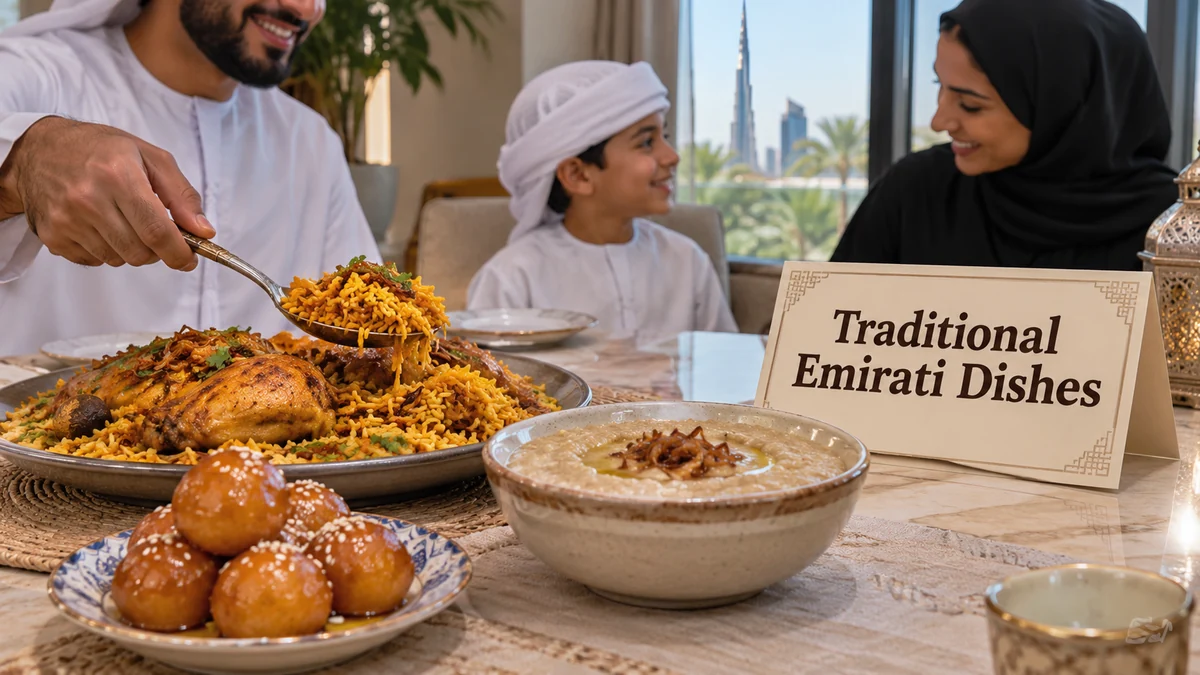
Compare cooking classesEmirati traditional food comes down to about 15 dishes built on rice and wheat, fish from the Gulf, and dates. Visitors usually meet harees and machboos first, with luqaimat close behind. In 2023, harees joined the UNESCO list of intangible cultural heritage.
Over centuries, Emirati cuisine grew from what the desert and the Gulf could supply, and later from spices that arrived by trade. Many of these dishes take hours. That is one reason people book cooking classes in Dubai to learn the techniques with a chef.
Below is the full list, what each dish is, when families eat it, and a tip for cooking it at home.
Middle Eastern cooking classes
Swipe or scroll to compare classes.
What Are the Most Famous Traditional Emirati Dishes?
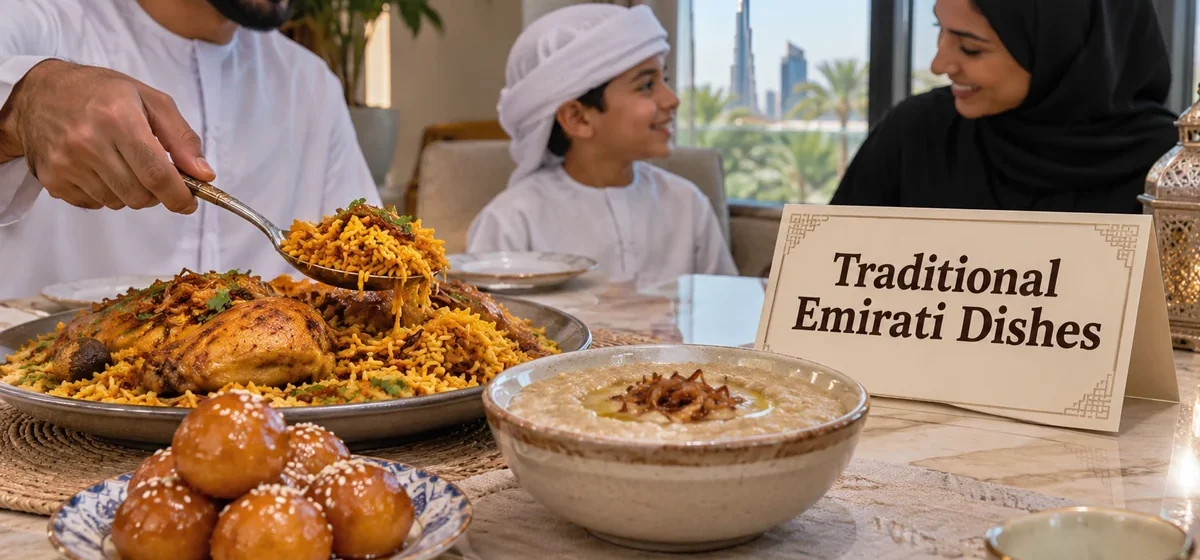
The most famous traditional Emirati dishes are harees, machboos, luqaimat, khameer, chabab and thareed. Rice dishes such as machboos and khuzi anchor family lunches. Breads and pancakes fill the breakfast table. Fish dishes, including madrooba and saloona, come from the coastal towns.
The table covers all 15 dishes of Emirati traditional food. Each one is still cooked at home, and many appear on Ramadan menus.
| # | Dish | What it is | When it is eaten |
|---|---|---|---|
| 1 | Harees | Wheat and meat slow-cooked with ghee until smooth | Ramadan, Eid, weddings |
| 2 | Machboos | Spiced rice cooked in stock with lamb, chicken or shrimp and dried lime (loomi) | Everyday lunch |
| 3 | Luqaimat | Small fried dough balls drizzled with date syrup | Ramadan, special occasions |
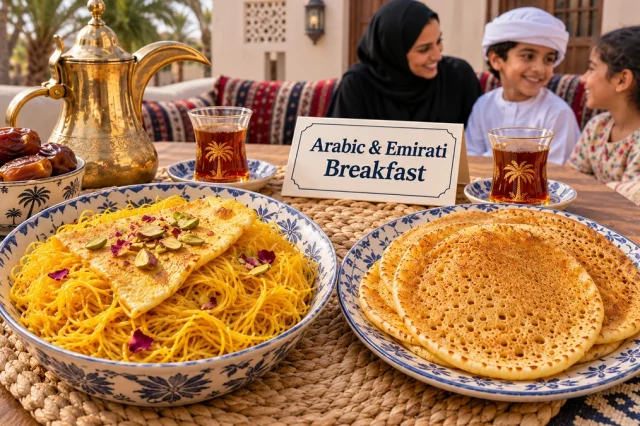
| 4 | Khameer | Soft yeast bread with sesame seeds | Breakfast, with cheese or honey |
| 5 | Chabab | Thin pancake flavoured with cardamom and saffron | Breakfast, with date syrup |
| 6 | Regag | Paper-thin crispy flatbread | Breakfast with egg and cheese |
| 7 | Balaleet | Sweet saffron vermicelli topped with a thin omelette | Breakfast, Eid mornings |
| 8 | Thareed | Meat and vegetable stew poured over regag | Ramadan iftar |
| 9 | Madrooba | Salted fish cooked with spices into a thick sauce | Ramadan iftar |
| 10 | Khuzi | Whole roasted lamb or goat on spiced rice with nuts | Celebrations, family lunches |
| 11 | Saloona | Everyday stew of vegetables with meat or fish | Lunch or dinner |
| 12 | Mhammar | Sweet yellow rice with caramelised onions, served with spiced fish | Lunch |
| 13 | Jasheed | Minced baby shark cooked with onions and spices | Lunch, coastal homes |
| 14 | Margoogat | Meat and vegetable stew with thin dough pieces cooked in | Winter lunches |
| 15 | Khanfaroush | Fried sweet cakes scented with saffron and cardamom | Tea time, celebrations |
Why rice and spice matter
Before trade routes brought rice, Emirati food leaned on bread, dates, camel milk and dried fish. According to the UAE government food page, spices and rice from foreign trade made dishes like machboos and khuzi possible. Saffron and dried lime still give Emirati dishes their signature taste, with cardamom and turmeric close behind.
What Is the National Dish of the UAE?
The UAE has no officially named national dish. Machboos is the dish most people point to, since it appears at nearly every family lunch. Harees holds the formal title. UNESCO added the harees dish and the skills behind it to its heritage list in 2023, in a joint file led by the UAE with Oman and Saudi Arabia.
The UNESCO harees listing describes wheat and meat cooked with ghee, a dish that turns up in folk stories and poetry across the three countries. Families still cook it in large pots during Ramadan and share it with neighbours. UNESCO recognised that too.
Machboos wins on daily life, while the heritage prize goes to harees, which families cook in pots big enough to share with half the street during Ramadan. Try both.
Where Can You Taste Emirati Food in Dubai?
The easiest place to taste Emirati food with context is a cultural meal at the Sheikh Mohammed Centre for Cultural Understanding in the Al Fahidi Historical Neighbourhood. Meal sessions run through the day with an Emirati host, who explains each dish and answers questions about customs.
Other good places to taste Emirati dishes:
- Ramadan iftar tents and hotel buffets, where harees and luqaimat appear every evening of the holy month.
- Heritage villages and festivals in winter, where local cooks often sell luqaimat and regag fresh off the griddle.
- Emirati restaurants in Jumeirah and Al Seef, which keep machboos and khameer on the menu all year.
Book ahead. Winter sessions fill up fast.
Where Can I Learn to Cook Emirati Food in Dubai?
Few Dubai cooking schools teach a full Emirati menu. Home cooks usually start with a wider Middle Eastern class. These classes teach spice blending, rice cooking and flatbreads, skills that carry straight into Emirati traditional food. On Pursueit, an arabic cooking class dubai cooks can book starts at AED 375.
| Cooking class on Pursueit | Venue | Age group | Price |
|---|---|---|---|
| Vegetarian Lebanese Feast | Latifa Tower, Sheikh Zayed Road | 16+ | AED 375 for 1 session |
| Moroccan Cooking Class | Palm Jumeirah Mall | 14+ | AED 499 for 1 session |
| The Levantine Feast: Private Culinary Class | Cluster I, JLT | 14+ | AED 840 for 1 session |
| Bread Baking Masterclass | Latifa Tower, Sheikh Zayed Road | 16+ | AED 425 for 1 session |
| Funtastic Kids Cooking Class | Palm Jumeirah Mall | 4 to 12 | AED 180 for 1 session |
A bread class is a smart second step. Khameer and regag both rely on dough handling, and a chef can show the right texture in minutes. Couples who want a shared evening can also read the cooking date guide for menu and budget ideas.
Want to cook these dishes yourself?
Compare Middle Eastern cooking classes on Pursueit from AED 375, with Lebanese, Moroccan and Levantine menus led by a chef.
How Do You Cook Emirati Dishes at Home?
For a first try at Emirati traditional food at home, start with machboos or balaleet. Both use pantry spices, take under 90 minutes and teach the base flavours of Emirati cuisine. Leave harees and khuzi for later. Both need hours of slow cooking and a large pot, which is why Emirati traditional food for a crowd is still often cooked by the family’s most experienced cook.
Four tips make the first attempts work:
- Make a spice mix once. Many Emirati home cooks keep a jar of bzar, a blend built on cumin and coriander, warmed with cinnamon and cardamom. Toast the whole spices before grinding.
- Pierce the loomi. Dried limes release their sour, smoky flavour into the stock only when cut or pierced.
- Soak the rice. Basmati soaked for 30 minutes cooks evenly in machboos and stays separate.
- Fry luqaimat hot and small. Spoon the batter into oil at about 170°C and keep each ball walnut-sized, so the centre cooks before the outside browns.
Home cooks who enjoy the process often move on to fresh pasta or bread next. The pasta from scratch guide uses the same dough skills.
Need help with dough or bread?
Book the Bread Baking Masterclass at Latifa Tower on Pursueit for AED 425, then take khameer and regag on at home.
More cooking and baking options
Swipe or scroll to compare classes.
Frequently Asked Questions
1. What is the most popular Emirati food?
For everyday eating, machboos leads, served at family lunches across the country. Luqaimat is the favourite sweet, especially during Ramadan. Harees stands out for heritage, since UNESCO listed it in 2023. All three are easy to find in your first week.
2. Is Emirati food spicy?
Fragrant, yes. Hot, rarely. Cooks rely on warm spices such as cardamom and saffron, plus the sour taste of dried lime, and chilli shows up only in small amounts in some fish dishes. Children and visitors who avoid heat can eat machboos or balaleet without worry.
3. What do Emiratis eat for breakfast?
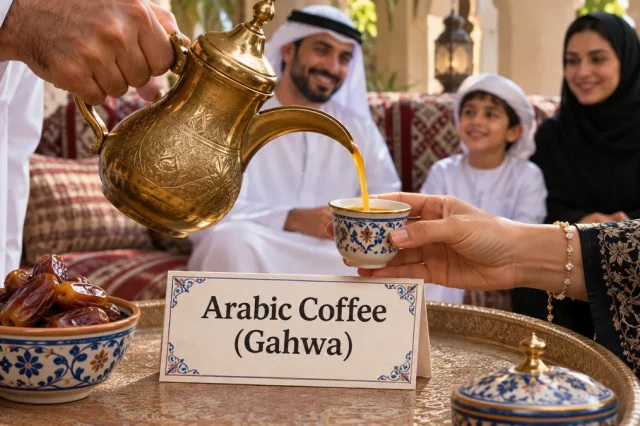
A traditional Emirati breakfast often includes balaleet, chabab with date syrup, khameer or regag with egg and cheese, plus dates and gahwa. The UAE grows more than 40 date varieties, so the plate of dates changes with the season and the family’s taste.
4. Is harees the same as haleem?
No. Harees uses only wheat and meat, cooked with ghee and a little salt until smooth. Haleem, eaten in South Asia, adds lentils and fried onions. The two share a slow-cooking method. The Emirati version is harees, and it is the one UNESCO recognised.
5. Can children take a cooking class in Dubai?
Yes. On Pursueit, the Funtastic Kids Cooking Class at Palm Jumeirah Mall takes children aged 4 to 12 for AED 180 per session. Kids learn simple recipes and kitchen safety. Families can practise simple Emirati food like chabab or balaleet at home afterwards, since both need only basic skills.
Ready to Book?
Emirati traditional food rewards patience, and a few chef-led sessions shorten the learning curve. Compare Middle Eastern and bread classes on Pursueit, check dates and prices, and book one before Ramadan menus return.