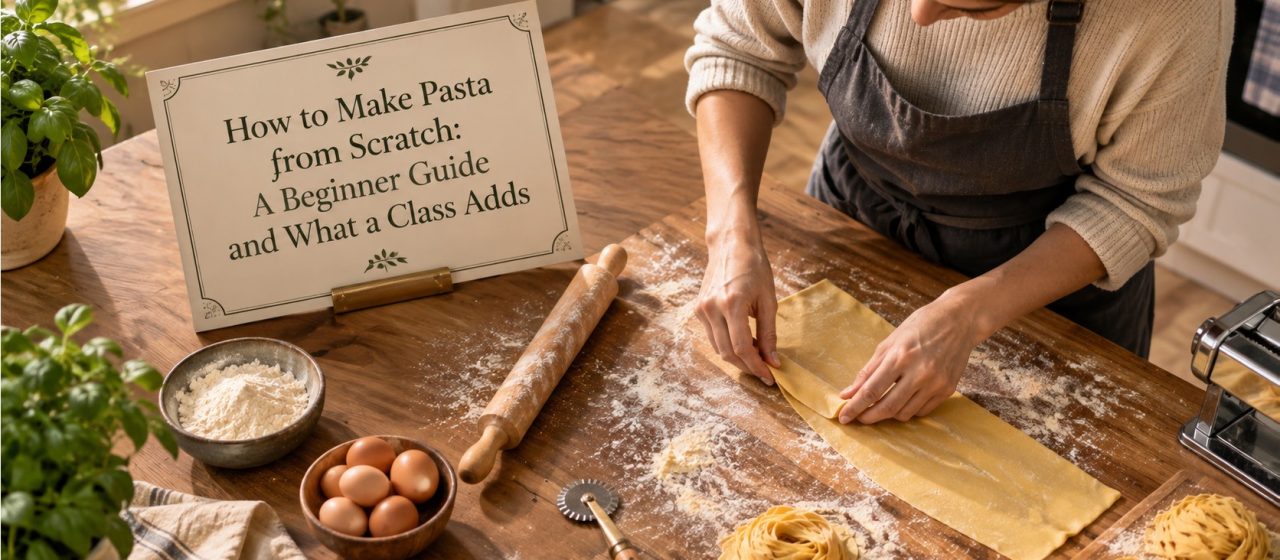
Learning how to make pasta from scratch is one of those cooking skills that looks more complicated than it is in the first attempt and reveals a clear set of fixable errors once you understand what you’re actually doing. Flour, eggs and water are the entire ingredient list for most fresh pasta. What makes it work or fail is technique: how you bring the dough together, how you develop the gluten, how you roll it, and how you know when it’s right. This guide walks through how to make pasta from scratch at home alongside what a pasta making workshop in Dubai adds that a recipe cannot.
The Ingredients: What You Need and Why
How to make pasta dough starts with one ratio decision: egg pasta or water pasta. Egg pasta uses 1 egg per 100g of flour, produces a rich, golden dough suited to filled pasta and flat shapes like tagliatelle and pappardelle. Water pasta is lighter and better for hand-shaped forms like orecchiette. Flour choice matters significantly: 00 flour (doppio zero) produces a silky, elastic dough suited to thin pasta shapes. Plain all-purpose flour works and is most widely available in Dubai. Semolina adds texture and is better for robust hand-shaped forms.
In a pasta-making workshop in Dubai, the instructor covers flour selection in the first session since it affects every subsequent step. This is one of the details that recipe guides typically reduce to a single line, but that experienced pasta instructors spend 10 to 15 minutes on because the choice cascades through the whole process.
How to Make Pasta Dough: Step by Step
Step 1: Combine
How to make pasta from scratch starts on the work surface, not in a bowl. Pour flour into a mound, make a well in the centre, crack eggs into the well and beat lightly with a fork. Gradually draw flour from the inner wall into the eggs, working from inside outward to prevent the liquid breaking through before the dough forms.
Step 2: Knead for 8 to 10 Minutes
How to make pasta dough with proper texture requires sustained kneading to develop the gluten network that gives pasta its elasticity. Push the heel of your hand into the dough, fold it over, rotate a quarter turn and repeat. The dough should go from rough and sticky to smooth and elastic. Do not add flour if the dough feels resistant; that resistance is the gluten developing correctly. Most beginners stop kneading too early.
Step 3: Rest for 30 Minutes
Resting is not optional. The gluten developed by kneading needs to relax before the dough can be rolled thin without springing back. Wrap tightly in plastic and leave at room temperature for at least 30 minutes. Skipping this step is the most common beginner error in how to make pasta from scratch. Rushed dough tears and retracts during rolling, making even thickness impossible.
Step 4: Roll
How to make pasta from scratch without a pasta machine: use a rolling pin and roll from the centre outward in all directions, turning the dough a quarter turn between each pass. For a pasta machine: start at the widest setting and work through to setting 5 or 6 for most shapes. Fresh pasta cooks in 2 to 3 minutes in heavily salted boiling water.
Where Beginners Go Wrong
How to make pasta from scratch produces consistent first-attempt results if you avoid three common errors:
- Under-kneading: The dough tears when rolled because the gluten network is underdeveloped. The fix is more kneading time, not more flour. Properly kneaded pasta dough feels silky and springs back slightly when pressed.
- Skipping the rest: Rolling before the gluten has relaxed produces dough that snaps back rather than stretching. 30 minutes is the minimum; 1 hour produces more cooperative dough that rolls more evenly.
- Uneven rolling: Inconsistent thickness produces pasta that cooks at different rates; thin sections overcook before thick sections are ready. How to make pasta dough that rolls evenly requires consistent pressure and rotation throughout the rolling process.
Types of Fresh Pasta You Can Make at Home
How to make pasta from scratch opens up several shape options once the basic dough technique is established:
- Tagliatelle: The most beginner-friendly shape. Roll to 2mm, dust with semolina, fold loosely and cut into ribbons. How to make pasta dough for tagliatelle uses the standard egg pasta ratio.
- Pappardelle: Wider ribbons cut from the same sheet as tagliatelle. Suits hearty sauces and is more forgiving of slight thickness variation than finer shapes.
- Penne and rigatoni: Require a pasta extruder. Not beginner hand-made territory, but covered in some pasta making workshop Dubai formats that include a machine.
- Gnocchi: Technically potato-based rather than standard pasta dough, but how to make pasta dough skills transfer to gnocchi preparation since the same light-hand approach to flour applies.
What a Pasta Making Workshop Dubai Adds
How to make pasta from scratch is learnable from a recipe. What a pasta making workshop Dubai adds is real-time tactile feedback. An instructor who watches you knead can tell you immediately whether the dough is ready or needs more time; a recipe cannot do this. Most beginner pasta makers under-knead because the dough feels resistant and they’re not confident that more effort is the right response. How to make pasta dough with the right texture is primarily a tactile judgment that develops through guided practice, not reading. Pursueit’s Italian cooking classes cover fresh pasta alongside sauces. The Italian cooking class and World Cuisine Italian (Private) at JLT are the confirmed pasta-relevant listings.
Frequently Asked Questions
What flour is best for making pasta from scratch in Dubai?
How to make pasta from scratch in Dubai: 00 flour is available at Carrefour, Spinneys and Italian specialty retailers and produces the best texture. All-purpose flour works well for beginners. Avoid self-raising flour.
Do I need a pasta machine?
No. How to make pasta dough and cutting it by hand produces excellent results for flat shapes like tagliatelle and pappardelle. A rolling pin and a sharp knife are the only equipment required.
How long does fresh pasta keep?
How to make pasta from scratch that stores properly: fully air-dried fresh pasta keeps for 2 days in the refrigerator. Frozen fresh pasta keeps for 1 month.
What does a pasta class in Dubai include?
Pasta making workshop Dubai sessions on Pursueit cover how to make pasta from scratch, including dough preparation, resting, rolling and cutting, alongside sauce-making. All ingredients and equipment are provided, and students take home what they make.
Is a pasta class in Dubai suitable for complete beginners?
Yes. Italian cooking classes on Pursueit are structured for all skill levels. No prior cooking experience is required.
Learn pasta from scratch with a chef — book an Italian cooking class.