Find your next Arabic class
Compare group, private and online Arabic lessons to practise everyday conversation.
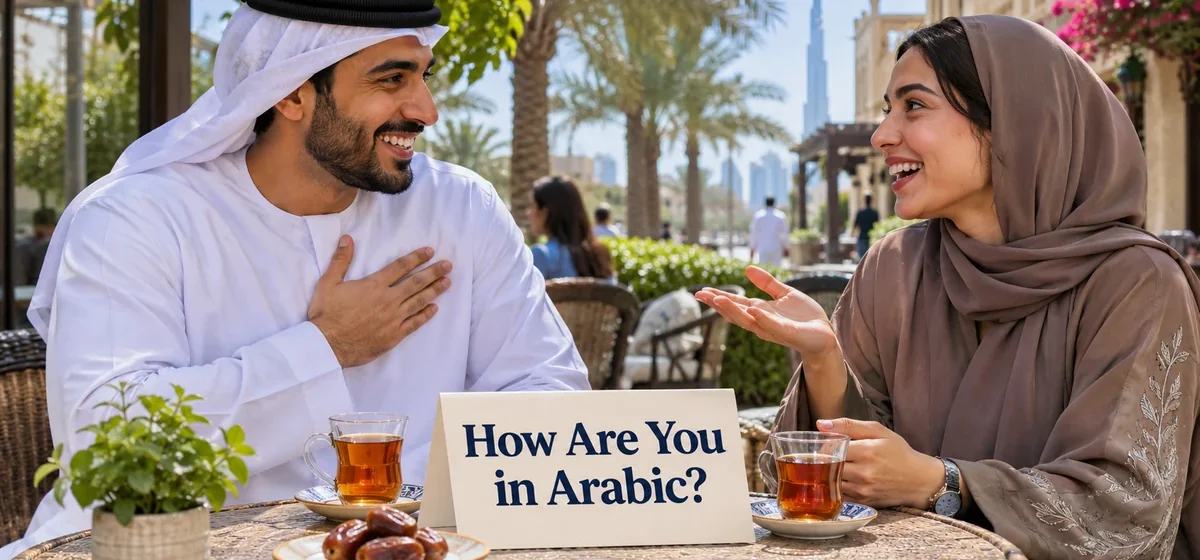
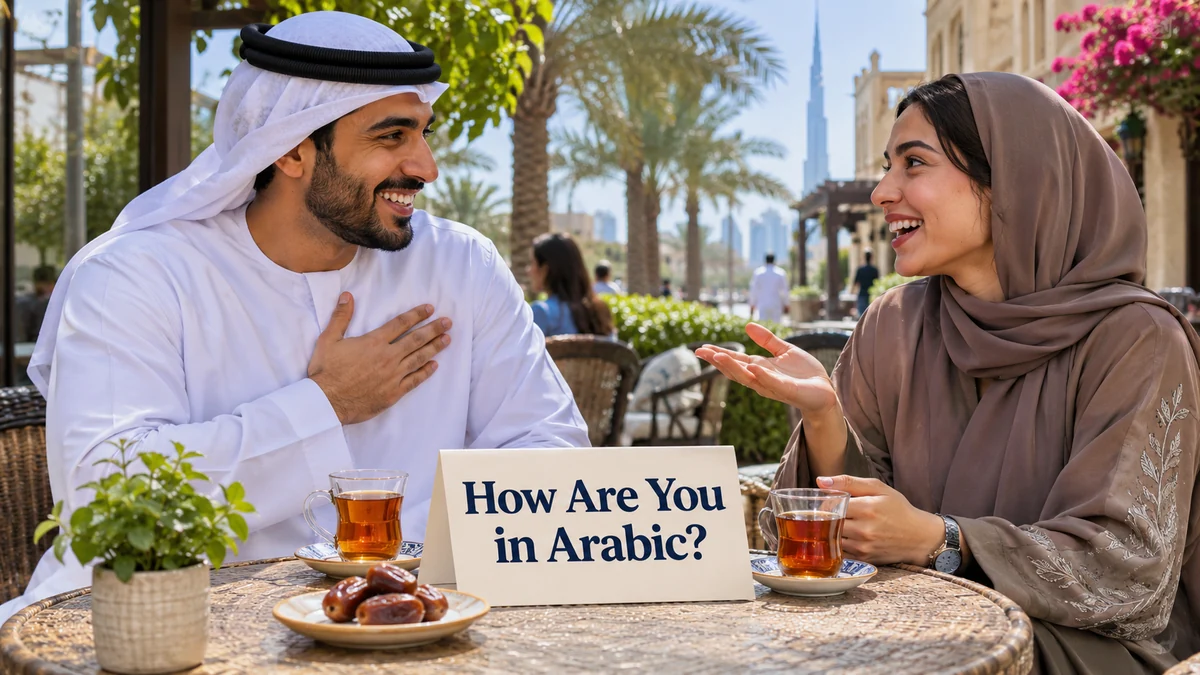
Compare Arabic classesThere are at least 3 common ways to say how are you in Arabic in the UAE. "Kayf halak" works everywhere, "Shlonak" sounds Gulf and friendly, and "Shakhbarak" is the warm Emirati way of asking for your news. Each has a standard reply. Usually it is "Bikhair, alhamdulillah", meaning fine, thank God.
This guide covers greetings and replies in the order you meet them in a day, from the first hello to the goodbye. Every phrase comes with Arabic script. Anyone who wants a teacher can compare ways to learn Arabic in Dubai on Pursueit.
Arabic classes for everyday conversation
Swipe or scroll to compare classes.
How Do You Say How Are You in Arabic?
The everyday way to say how are you in Arabic is "Kayf halak" (كيف حالك؟), the form used with a man. A woman hears "Kayf halik". Formal Arabic stretches it to "Kayfa haluka" and "Kayfa haluki", and around the UAE the Gulf form "Shlonak" (شلونك؟) is just as common.
| English | Arabic | Say it | To whom | Feel |
|---|---|---|---|---|
| How are you? | كيف حالك؟ | kayf HAA-lak | Man | Neutral, works everywhere |
| How are you? | كيف حالك؟ | kayf HAA-lik | Woman | Neutral, works everywhere |
| How are you? | شلونك؟ | shloo-NAK | Man | Gulf, friendly |
| How are you? | شلونج؟ | shloo-NICH | Woman | Gulf, friendly |
| What’s your news? | شخبارك؟ | shakh-BAA-rak | Man | Emirati, warm |
| What’s your news? | شخبارج؟ | shakh-BAA-rich | Woman | Emirati, warm |
Notice the ending. Arabic changes the last sound depending on who you are talking to, and Emiratis notice when a newcomer gets it right.
How Do You Reply to Kaifa Haluk?
Reply to "kaifa haluk" with "Bikhair, alhamdulillah" (بخير، الحمد لله), which means "fine, thank God". Then return the question with "Wa inta", or "Wa inti" if you are speaking with a woman. Gulf speakers often say "Zain, alhamdulillah" (زين), which sounds relaxed and is the reply you will hear most from Emirati colleagues and neighbours.
| Reply | Arabic | Say it | Meaning |
|---|---|---|---|
| Bikhair, alhamdulillah | بخير، الحمد لله | bi-KHAIR, al-ham-du-LIL-lah | Fine, thank God |
| Zain, alhamdulillah | زين، الحمد لله | ZAIN, al-ham-du-LIL-lah | Good, thank God (Gulf) |
| Tamam | تمام | ta-MAAM | Fine, all good |
| Mashi al-hal | ماشي الحال | MAA-shee al-HAAL | Getting by |
| Wa inta? / Wa inti? | وأنت؟ | wa IN-ta / wa IN-ti | And you? (man / woman) |
"Alhamdulillah" belongs in the answer even on a bad day, because the phrase is a matter of manners. Expect a question about your family next, and the polite answer is "Kulhum bikhair", they are all fine.
Want to practise these out loud?
Join Arabic for Beginners at Fortune Executive Tower, JLT, on Pursueit. It runs 10 sessions of 2 hours for AED 1,050, taught through listening and speaking.
How Do You Greet Someone in Arabic in the UAE?
The most respectful greeting in the UAE is "As-salamu alaykum" (السلام عليكم), meaning peace be upon you. The reply is "Wa alaykum as-salam" (وعليكم السلام). Use it anywhere. It suits every setting and every time of day, from an office lift in Business Bay to a majlis visit or a government service counter.
How to say hello in Arabic
Here is how to say hello in Arabic without sounding stiff: "Marhaba" (مرحبا). The usual reply is "Marhabtain" (مرحبتين), literally "two hellos". "Ahlan" (أهلاً) is lighter still. Hosts use the full "Ahlan wa sahlan" (أهلاً وسهلاً) at the door. Easy.
How to say hi in Arabic
Emiratis often say "Hala" (هلا) or "Hala wallah" (هلا والله) for a quick hi. That is how to say hi in Arabic the local way. Answer with "Hala feek", or "Hala feech" if the greeting came from a woman. Keep it for friends. Older people and officials get "As-salamu alaykum".
Greetings by time of day
| English | Arabic | Say it | Reply |
|---|---|---|---|
| Good morning | صباح الخير | sa-BAAH al-KHAIR | Sabah an-noor (صباح النور) |
| Good evening | مساء الخير | ma-SAA al-KHAIR | Masa an-noor (مساء النور) |
| Goodbye | مع السلامة | MA-a s-sa-LAA-ma | Allah ysalmak (الله يسلمك) |
What Is Your Name in Arabic?
What is your name in Arabic, in everyday UAE speech, is "Shu ismak" (شو اسمك؟). With a woman, the ending changes to "Shu ismich". The formal version is "Ma ismuka" (ما اسمك؟). Answer with "Ismi" (اسمي) followed by your name, then add "Tasharrafna" (تشرفنا), meaning pleased to meet you.
A first conversation in Dubai might run like this:
- "As-salamu alaykum." "Wa alaykum as-salam."
- "Shlonak." "Zain, alhamdulillah. Wa inta."
- "Bikhair. Shu ismak." "Ismi Sam. Wa inta."
- "Ismi Khalid. Tasharrafna." "Tasharrafna."
That short exchange covers a greeting, how are you in Arabic, and names. Small talk rarely goes further.
How Do You Say Thank You in Arabic?
Say "Shukran" (شكراً). Add "jazeelan" (جزيلاً) for thank you very much. Around the UAE you will also hear "Mashkoor" (مشكور) to a man and "Mashkoora" to a woman. The reply is "Afwan" (عفواً) or "Al-afu" (العفو), meaning you’re welcome.
Knowing how to say thank you in Arabic opens most doors. A few more polite words carry a long way:
- Min fadlak / Min fadlik (من فضلك): please, to a man or a woman.
- Inshallah (إن شاء الله): God willing, used for any future plan.
- Mashallah (ما شاء الله): said to admire something, especially a child or a new home.
- Allah ya’teek al-afya (الله يعطيك العافية): God give you strength, said to someone working.
A longer word list for shopping and taxis sits in the guide to 58 Arabic words and phrases.
How Fast Can You Learn Basic Arabic Greetings?
Beginners can usually greet, ask how are you in Arabic and reply confidently within a week of daily practice. Holding a short conversation takes longer, usually 20 or more hours of guided speaking. Practise daily. A course built around listening and speaking gets there faster than self-study with an app.
On Pursueit, the spoken arabic course at Fortune Executive Tower in JLT uses a listen-and-speak method with transliteration, so learners speak from day one without needing the alphabet first.
| Arabic class on Pursueit | Where | Age | Price |
|---|---|---|---|
| Arabic for Beginners (Group) | Fortune Executive Tower, JLT | 18+ | AED 1,050 for 10 sessions of 2 hours |
| Individual Arabic Classes | Fortune Executive Tower, JLT | 5+ | AED 1,840 for 10 sessions |
| Private Arabic Online Class | Online | 5+ | AED 1,840 for 10 sessions |
Learners who want to read signs can start with the Arabic alphabet guide before their first class.
Prefer one-to-one lessons?
Individual Arabic Classes in JLT or online cost AED 1,840 for 10 sessions on Pursueit and take learners from age 5.
Group, private and online Arabic lessons
Swipe or scroll to compare classes.
Frequently Asked Questions
1. What does Shlonak mean?
"Shlonak" (شلونك) is the Gulf way of asking how are you, heard across the UAE and often the first Arabic word a new resident picks up. Use it with a man, and switch to "Shlonich" for a woman. Reply with "Zain, alhamdulillah" or "Bikhair", then ask back with "Wa inta" or "Wa inti" to keep it polite.
2. Is it rude to answer in English?
No. English is widely spoken in Dubai, and nobody expects fluent Arabic from a newcomer. Effort counts. Opening with "As-salamu alaykum" or "Shlonak" before switching to English is appreciated. Even 2 or 3 Arabic phrases at a government office or a majlis make a friendly first impression.
3. How do you greet during Ramadan and Eid?
During Ramadan, say "Ramadan Kareem" (رمضان كريم). Expect "Allahu akram" (الله أكرم) back. At Eid, the greeting is "Eid Mubarak" (عيد مبارك), usually answered with "Allah ybarik feek" (الله يبارك فيك). Both suit colleagues and shopkeepers alike during the month of fasting and the Eid holiday.
4. Should I shake hands when greeting in the UAE?
Men usually shake hands with men, using the right hand. With a woman, wait for her to offer her hand first, and if she does not, place your right hand on your chest and give a small nod instead. Close Emirati friends may touch noses, a gesture best left to them.
5. Do I need to learn the Arabic alphabet to speak?
No. Speaking comes first. Spoken Arabic can be learned through transliteration, which writes Arabic sounds in English letters. The Arabic for Beginners group course in JLT teaches this way across 10 sessions. Learning the 28 letters later helps with reading street signs and menus around Dubai.
Ready to Book?
Knowing how are you in Arabic opens the door, and a few guided sessions keep the conversation going. Compare Arabic classes on Pursueit by format and timing. Start this week.