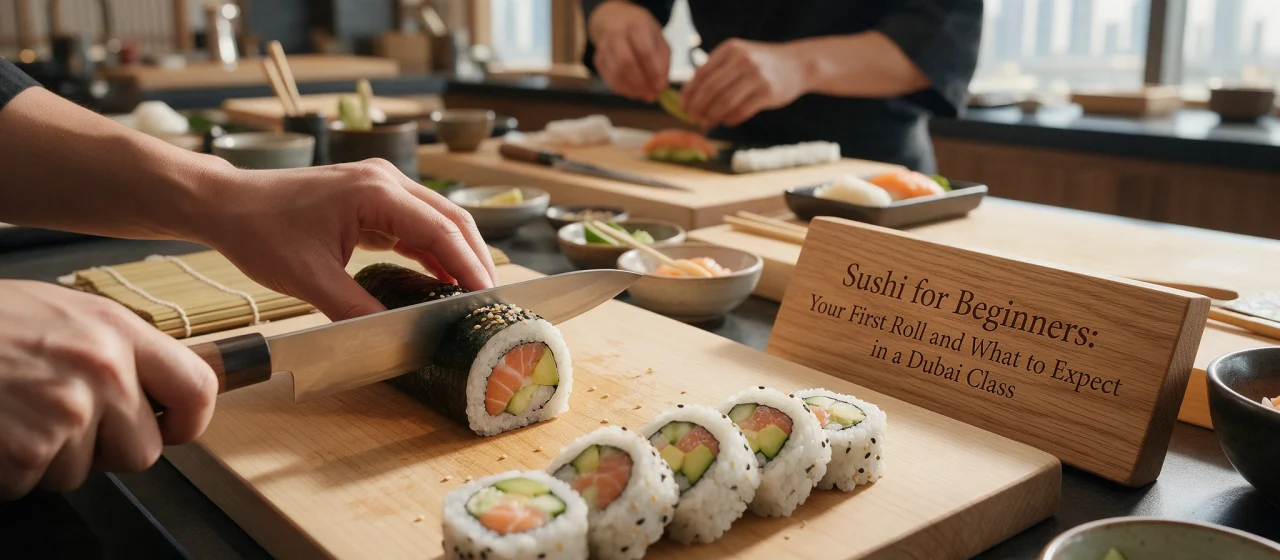
Sushi for beginners is one of those cooking goals that becomes surprisingly manageable once the key technique, cooking and seasoning the rice correctly, is understood. The rolling and cutting that most people think of as the challenge is secondary. A maki roll made with perfectly seasoned rice that crumbles during cutting is worse than a slightly uneven roll with rice that holds its shape. This guide walks through sushi for beginners in practical terms: equipment, rice technique, basic roll types and what a sushi making class dubai adds that a recipe tutorial cannot.
Equipment for Sushi for Beginners
- A rice cooker or a heavy-bottomed pot with a tight lid. Sushi rice needs controlled steam to cook correctly. A thin pot with a loose lid produces unevenly cooked grains.
- A wide, flat bowl (hangiri) or the widest bowl you own. The wide surface allows the vinegar seasoning to be folded into the rice while hot and allows rapid cooling from evaporation.
- A bamboo sushi mat (makisu). Available at most Dubai supermarkets for AED 5 to AED 15. Non-negotiable for sushi for beginners learning maki rolls, rolling by hand without a mat produces inconsistent results.
- A very sharp, thin-bladed knife. A dull knife drags through the roll and pushes the ingredients rather than cutting cleanly. Wet the blade between cuts. Most sushi classes dubai spend dedicated time on knife technique.
- Nori sheets, sushi rice (short-grain Japanese rice), rice vinegar, sugar, salt and fillings. Available at Carrefour, Spinneys and Waitrose.
Sushi Rice: The Technique That Determines Everything
Sushi for beginners is fundamentally about the rice. The ratio for sushi rice: 1 cup rice to 1 cup water, slightly less water than standard boiled rice since the vinegar adds moisture after cooking. Wash the rice until the water runs clear to remove excess starch. The seasoning ratio for most sushi classes dubai recommend: for 300g dry rice, combine 60ml rice vinegar, 1.5 tablespoons sugar and 1 teaspoon salt. Heat until the sugar dissolves, cool slightly, then fold (do not stir) into the hot cooked rice using a cutting motion. Fan the rice while folding to cool it rapidly. The goal is glossy, slightly sticky rice that holds shape when pressed but is not gummy.
This rice technique is the focus of the first session of any sushi making class dubai on Pursueit, and it is the step that most home attempts get wrong without guidance from an instructor.
Making Your First Maki Roll: Step by Step
Step 1: Lay the nori
Sushi for beginners: rough side of the nori facing up on the bamboo mat. The nori should reach the edges of the mat on three sides but leave a 2cm strip clear at the top for sealing.
Step 2: Spread the rice
Wet your hands with a mix of water and a little rice vinegar to prevent sticking. Spread a thin, even layer of rice across the nori, leaving the clear strip uncovered. The most common sushi for beginners error: too much rice, which produces an oversized roll that doesn’t close cleanly.
Step 3: Place the fillings
Lay fillings in a horizontal line 2 to 3cm from the bottom edge. Cucumber, avocado and cooked prawn are the most cooperative combinations for sushi for beginners. Raw fish requires specific freshness standards, easier to manage in sushi classes dubai than at home for a first attempt.
Step 4: Roll
Lift the bottom edge of the mat with thumbs while holding the filling with fingers. Roll forward firmly, tucking the filling under the rice and compressing lightly but consistently. Pull the mat back, advance the roll, compress again. Tight, even rolls require consistent pressure throughout rather than a single compression point.
Step 5: Cut
Wet the blade with a damp cloth. Let the knife weight do the work, do not saw. Sawing causes more damage than a single clean press-through. Cut in half first, then each half into 3 to 4 pieces.
Common Sushi for Beginners Mistakes
- Over-filling: Too much rice or too many ingredients makes rolling impossible without the roll splitting. Sushi for beginners should use less filling than feels right, the finished roll expands during cutting.
- Rolling too loosely: A loose roll falls apart when cut. The compression should be firm enough that the mat leaves a slight indent. Most sushi making class dubai instructors spend time on this specific pressure calibration.
- Cutting without wetting the blade: Nori and rice stick to a dry blade. Wet the knife between every cut for clean results.
- Rushing the rice: Rice that hasn’t cooled properly tears the nori when spread. 10 minutes of cooling after seasoning produces a more workable rice temperature for sushi for beginners.
What Sushi Classes Dubai Add
Sushi for beginners in a class setting produces better first-attempt results than home practice for two specific reasons. First, the instructor has the rice correctly prepared or demonstrates the process before students attempt it. Second, rolling technique is a hands-on skill where the instructor corrects pressure and motion in real time. Most sushi classes dubai also cover knife skills as a specific module. The Japanese cooking class (Private, Cluster I, JLT) is the confirmed sushi-relevant listing on Pursueit.
Frequently Asked Questions
What is the most important skill for sushi beginners?
Sushi for beginners: rice preparation determines most of the final quality. Rolling and cutting are learnable quickly. Correctly seasoned rice that holds its shape without being gummy takes more practice and is best learned in a sushi making class dubai with instructor feedback.
Can I make sushi without raw fish?
Yes. Vegetable maki and cooked proteins (prawn tempura, cooked crab, tamago egg) produce excellent sushi for beginners without raw fish sourcing complexity. Most sushi classes dubai for beginners use cooked proteins specifically.
Where can I buy sushi ingredients in Dubai?
Sushi rice, nori, rice vinegar and bamboo mats are at Carrefour, Spinneys and Waitrose. Japanese specialty items are at Kibsons online delivery and some Union Coop locations. All ingredients for a sushi making class dubai on Pursueit are provided in the session fee.
What does a sushi class in Dubai cost?
The World Cuisine Japanese Cooking Class (Private) at JLT covers Japanese cuisine and sushi technique. Check the current price on the Pursueit listing before booking.
Is a sushi class suitable for complete beginners?
Yes. Sushi classes dubai on Pursueit are structured for all skill levels. No prior cooking experience required.
Ready to roll? Book your sushi class in Dubai — explore Asian cooking classes